How to Structure a Blog Post (For Food Bloggers)
Learning how to structure a blog post is one of the most important skills a food blogger can develop. A well-structured post helps readers quickly find what they’re looking for, keeps them engaged on the page, and makes it easier for search engines to crawl and rank your content.
However, food blogs have a unique structure that most generic blogging advice overlooks. In this guide, I’ll walk you through every element I use to structure a food blog post, from the headline down to the recipe card, so your posts are easy to read, optimized for SEO, and built for long-term traffic.
Before You Begin: Stop Writing Like a Diary
One of the most common mistakes I see new bloggers make is treating blog posts like personal diary entries.
While some readers may enjoy longer stories and behind-the-scenes details, most people visiting food blogs today are browsing with a specific goal in mind. They want to find a recipe, learn a technique, or get an answer, and they want to do it quickly.
Modern blog browsing is largely transactional. Readers want to:
Get in
Find what they need
Get out
This doesn’t mean your writing has to be boring or impersonal. In fact, in order to establish E-E-A-T, it should be extremely personalized.
However, that personalization needs to come with structure and clarity. Save longer personal stories for social media, newsletters, or dedicated storytelling posts, and let your blog content focus on being helpful and easy to navigate.
Why Blog Post Structure Matters
Because readers skim rather than read every word, structure is what keeps them on the page.
A well-structured blog post helps:
Make content easier to read and skim
Helps Google understand the hierarchy of your page
Builds trust by presenting information clearly and professionally, building domain authority
Increases your chances of capturing featured snippets and sitelinks
If you search almost any topic on Google, you’ll notice that top-ranking posts follow very similar layouts. That’s not accidental. It’s because a clear structure works for both readers and search engines.
How to Structure a Blog Post (For Food Bloggers)
With ever-changing algorithms and different content topics, the exact structure of your blog posts will likely (and probably should) vary. However, there are a few tips that stay consistent.
Start with a Clear, Keyword-Focused Headline
Your headline (or title) is the first thing readers and search engines see. It often determines whether someone clicks on your post at all.
A strong headline should:
Include your primary keyword
Clearly communicate the benefit of reading
Be engaging without being misleading
For example:
How to Make Crispy Smashed Potatoes
The Best Banana Bread Recipe (No Mixer!)
Think of your headline like the cover of a cookbook. It sets expectations and invites people in.
Include a Jump to Recipe Button
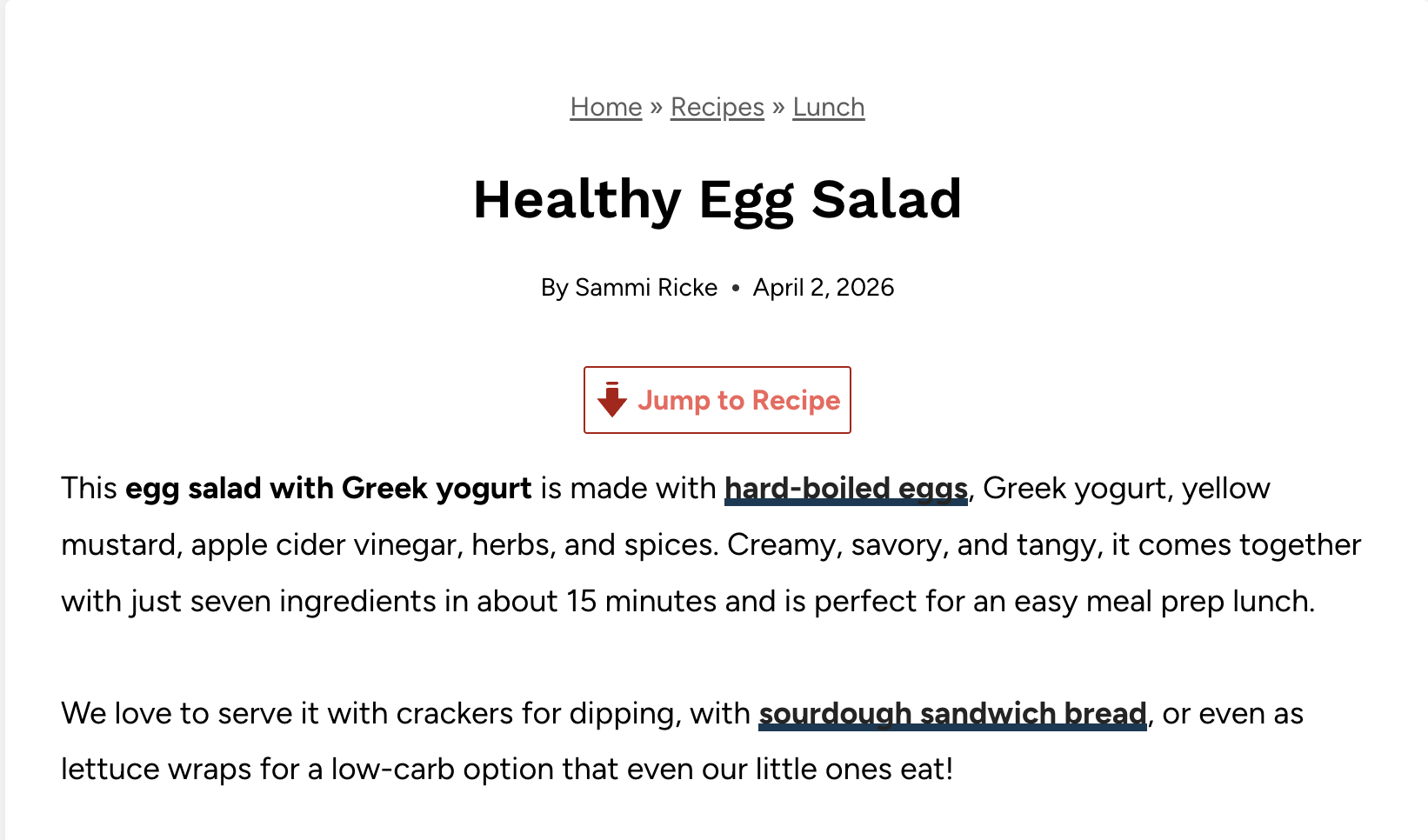
This small button, placed immediately below your hero image or title, is a staple of high-performing food blogs. It lets impatient readers skip straight to the recipe card, and it directly reduces your bounce rate, because readers who want context will still scroll.
Write a Concise, Helpful Introduction
Every blog post should begin with an introduction that clearly explains what the post is about and why it matters. For food blogs, a few short paragraphs are enough.
Use this space to use adjectives to describe flavor, texture, ease of preparation, or why this recipe works for a specific occasion or dietary need. Keep the copy interesting, but get to the point quickly.
Include a “About This Recipe Section”
This is the section most generic blogging guides skip, and it's one of the most important for food SEO. The "About this recipe" section (sometimes labeled "Why you'll love this" or "What makes this work") is where you build E-E-A-T by demonstrating first-hand knowledge and expertise.
Use this space to cover:
Why you developed or love this recipe
Key flavors, textures, or techniques that make it special
Any recipe testing notes (what didn't work, what you changed)
Seasonal relevance or occasions on which it works best
Note: Since writing this post, this section has become slightly less common but is still included in many posts. Use your best judgment, and experiment with what works for your audience.
Include an Ingredients and Substitutions Section
Before the recipe card, many top-ranking food posts include a dedicated section for key ingredients and possible substitutions. This section answers a common reader question — "I don't have X, what can I use?" — and increases the usefulness of your post without padding it with fluff.
You don’t have to include every ingredient in the recipe. Just make call-outs for the key components, drawing attention to why they’re important, what to buy, how to make swaps, etc. Inject personal anecdotes here, and try to anticipate questions your audience might ask.
Break Up the Body with Headings and Subheadings
Large blocks of text are one of the fastest ways to lose readers. Organize your body content with clear H2 and H3 headings that reflect your primary and secondary keywords. This also creates the hierarchy Google uses to understand your page and makes your content easier for readers to skim.
Headings don’t have to be boring. You can still incorporate personality as long as the words clearly reflect what the section covers. For example:
Perfect Your Pasta with These Easy Tips
Everything You Need to Know Before You Start Cooking
Incorporate high-quality images throughout, not just a hero shot. Step-by-step photos, ingredient flat lays, and process shots all reduce reader confusion and keep them engaged. Optimize every image with descriptive file names and alt text.
Include a Recipe Card (with a Schema Markup)
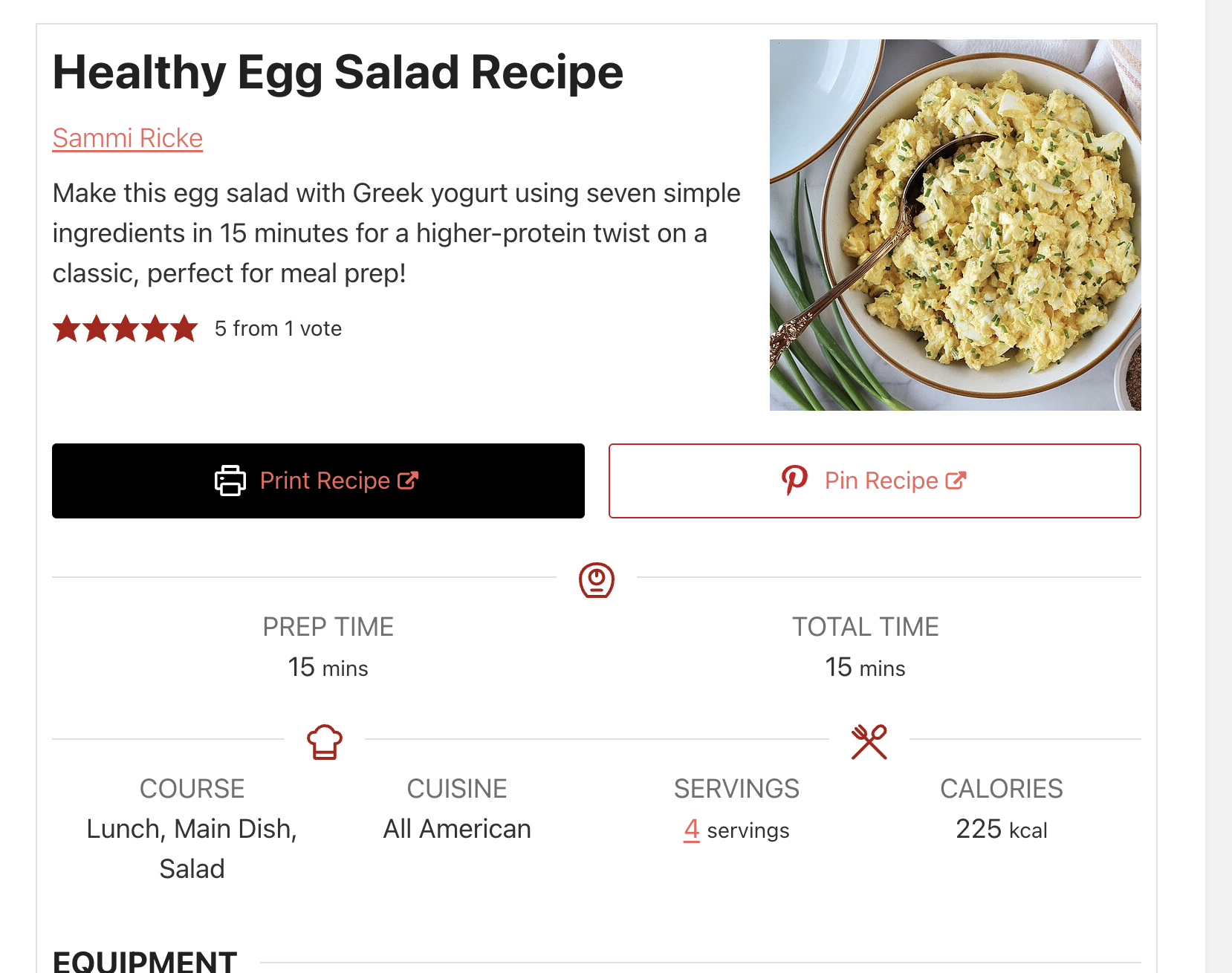
The recipe card is the centerpiece of every food blog post, and it's your single most powerful SEO asset. A well-formatted recipe card, built with a plugin that outputs schema markup (structured data), tells Google exactly what your post contains so it can surface it in rich results like recipe snippets and knowledge panels.
Your recipe card should include: title, description, prep/cook time, servings, ingredients, numbered instructions, notes, nutrition info, and a high-quality image. Most recipe plugins (Tasty Recipes, WP Recipe Maker, WPRM) handle the schema markup automatically.
Add an FAQ Section
A FAQ section placed after the recipe card is one of the most SEO-effective additions to a food blog post. It captures "People also ask" queries on Google, increases dwell time, and targets long-tail keywords naturally.
Find FAQ topics by looking at the "People also ask" box on Google for your target keyword, or by reviewing comments and emails from readers. Each question becomes an H3, with a concise answer of 2-4 sentences below it.
Note: FAQ sections have become debated and are found in fewer posts. The general consensus is that they’re still helpful. Again, cater to your audience, make sure to include relevant, helpful information, and avoid fluff.
Include a Simple Conclusion and Call to Action
Unlike other types of blog posts, food blog posts don’t always need a long recap at the end. That’s often what the recipe card is for.
What is important is including a clear call to action. Readers are far more likely to take the next step if you tell them what to do.
Common calls to action include:
Leaving a comment or rating
Sharing the recipe
Signing up for your newsletter
Stick to one call to action so you don’t overwhelm your audience. If using WordPress, I recommend creating a reusable block!
Pro Tips for Better Blog Post Delivery
These tips will improve reader experience, keeping your readers on the page longer.
Keep Paragraphs Short
Aim for one to three sentences per paragraph with plenty of white space. Blog posts are not academic essays; screens demand breathing room.
Blog posts are not academic essays. Short paragraphs (one to three sentences in length) and plenty of white space make content easier to read on screens.
This allows readers to skim comfortably without feeling overwhelmed.
Use Your Natural Voice
Structure doesn’t mean sounding generic. Your voice is what makes your content memorable.
Incorporate your favorite phrases, unique cooking tips, and personal insights where appropriate. This helps set you apart from generic food blogs and builds a recognizable brand.
Speak Plainly and Clearly
Avoid overly complex vocabulary or jargon. Blog content should feel approachable and easy to understand.
If you need to use a technical term, briefly explain it. The goal is clarity, not sounding impressive.
Use Transition Words
Transition words help your writing flow naturally and improve readability. They also support SEO by making content easier to understand.
And yes, it’s perfectly fine to start sentences with “And” or “But.” Don’t stress about grammar. Write how you would talk.
Don’t Write Just to Hit a Word Count
How long a blog post should be is a hot topic. Longer posts can help with SEO, but only if they provide real value.
Writing 1,200 words when 300 would answer the question often hurts more than it helps. Focus on search intent and usefulness first. If the post fully answers the reader’s question, length becomes secondary.
Use Bullet Points and Bold Text Strategically
Bullet points and bold text make posts easier to skim and help important information stand out.
Use them to:
Highlight key takeaways
List tips, ingredients, or steps
Draw attention to important details
These small formatting choices make a big difference in usability.
Incorporate High-Quality Visuals
Images help break up text and visually demonstrate ingredients, techniques, and steps.
Make sure your images are:
Relevant to the content
High quality
Properly optimized for web use
Optimized with file names, alt text, etc.
Unrelated or low-quality visuals can distract readers and negatively impact performance.
Final Thoughts
Learning how to structure a blog post is one of the fastest ways to improve your food blog. Clear formatting, intentional headings, and reader-focused writing make posts easier to read, easier to rank, and more effective overall.
Writing not your thing? Check out my food blog writing packages to see how I can help!